Overgrowth Along Fence Lines and Easements Removed
Brush clearing in Elizabeth for rural parcels with years of accumulated overgrowth
A pasture edge or fence line that has not been maintained for several seasons will close in with woody brush, invasive growth, and tangled undergrowth to the point where the land stops functioning as usable ground. Genesis Earthworks clears that overgrowth on rural and back-lot properties around Elizabeth, Indiana, with the owner running the equipment personally on every job. Because the business is owner-operated, the person who answers the phone and walks your property is also the person who shows up to do the clearing—there is no handoff between the estimate and the work.
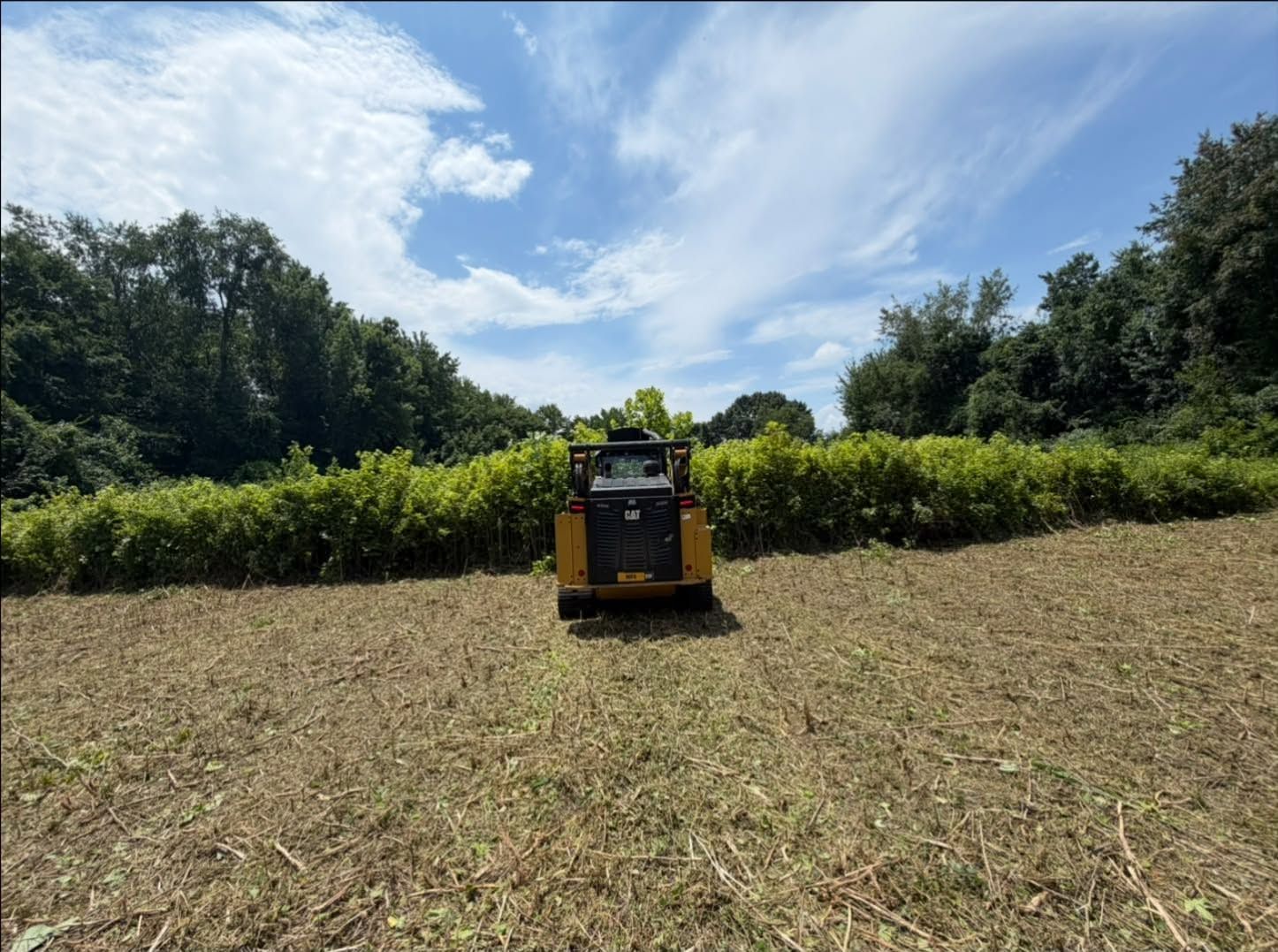
After a site walk to identify the extent of the overgrowth and the edges you want cleared, the crew works through the material with a skid steer and mulching attachment, cutting brush at ground level and working along fence lines, driveway easements, and pasture margins. One decision to confirm before the job is scheduled: whether cut material gets mulched and left in place or hauled off the property, because that choice affects both the final appearance and what you can do with the cleared ground afterward.
Request a free site walk to get an accurate picture of what the clearing involves and what the finished edges will look like.
How Brush Clearing Addresses Overgrown Rural Ground
The mulching attachment on the skid steer cuts woody brush down to ground level and processes the material in the same pass, which is a different result from mowing—mowing leaves standing stems, while mulching reduces them to a ground-level layer that does not regrow from the cut point. This approach works well along fence lines and easement corridors where repeated passes with conventional equipment would be impractical and where the goal is to restore a clean, defined edge rather than simply knock the growth back temporarily.
Once clearing is complete along a fence line or driveway easement, the edge is visible and defined again, the ground alongside it is accessible, and you can see the full run of the fence or the corridor from end to end. On rural parcels where the overgrowth had closed in around the fence posts themselves, the posts become visible and checkable for the first time in years, which is often the moment property owners realize a section of fencing also needs attention.
Genesis Earthworks brings twelve years of field experience to this work, and the owner-operated structure means the scope discussed in the estimate does not change based on who shows up to do the clearing. Rural parcels in this part of southern Indiana often have multiple clearing needs on the same property—fence line, driveway easement, and back lot—and the site walk is the right time to identify all of them so the quote covers the full job.
What Property Owners Ask About the Work
The following questions focus on how brush clearing is performed, what the process involves, and what the property looks like once the work is finished.
What is the difference between mulching brush in place and hauling it off?
Mulching leaves processed material as a ground-level layer that breaks down over time, while hauling removes the material entirely and leaves bare, cleared ground—your choice depends on what you plan to do with the area after clearing.
How does the mulching attachment cut brush differently from a standard mower?
The mulching attachment is designed for woody stems and shrub-scale growth, cutting and shredding material at ground level in a single pass rather than simply cutting the top off stems that will regrow from the base.
Why does a site walk happen before brush clearing starts?
The site walk establishes the clearing boundaries, identifies any obstacles the equipment needs to work around, and confirms whether the scope includes fence lines only, easements, back-lot edges, or a combination.
How does the condition of a rural parcel in Elizabeth affect the clearing approach?
Rural lots in this area often combine fence-line overgrowth with denser back-lot brush, and the site walk determines which sections require the full mulching pass versus lighter edge work so the crew sequences the job efficiently.
What should a cleared fence line or easement look like when the job is finished?
The ground along the cleared corridor should be at or near grade, with no standing stems, and the boundary between cleared and uncleared ground should follow the line you specified during the site walk.
Genesis Earthworks also clears brush in Corydon, Salem, Jeffersonville, Scottsburg, and New Albany. To schedule a site walk on your property, call (812) 704-7936 and describe the overgrowth so the estimate can be prepared with your specific conditions in mind.