Ground Shaped and Moved for Rural Build Sites
Excavation in Elizabeth for hillside lots and rural parcels requiring cut-and-fill work
Cutting a building site into sloping ground is the most common excavation task on rural lots in Harrison and Floyd Counties, where most available parcels follow the terrain rather than sitting on level ground. Genesis Earthworks handles this kind of excavation—cutting, moving, and shaping soil to the grade a site plan requires—with the owner operating the equipment directly on every job. The company's excavation scope covers site work on rural and build-site properties; it does not include basement or foundation digging, so the work here is entirely about getting the ground into the right shape before other trades arrive.
The crew works with the skid steer to cut and move soil to the target elevation in the site plan, keeping the cut-and-fill relationship as balanced as possible so that material removed from the high side of a slope is used to build up the low side rather than hauled off the property. That balance matters because importing or exporting fill adds cost and logistics that can be avoided when the site is read correctly before cutting starts. Before work begins, confirm with Genesis Earthworks whether the quote includes fill import or export and who is responsible for setting the finish grade elevations.
Call (812) 704-7936 to discuss your site plan and arrange a property visit before excavation work is scheduled.
Why Cut-and-Fill Balance Changes the Approach
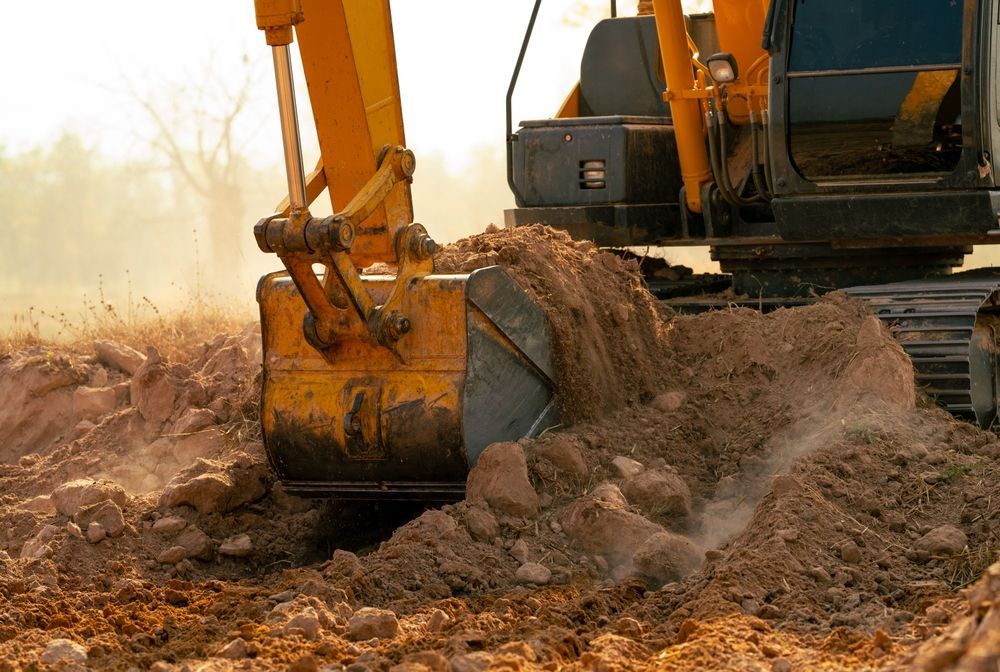
Excavation on a hillside lot involves a sequence of decisions that starts before the first pass: where to make the initial cut, how deep the cut needs to go to reach stable ground, and how to move the excavated material to the fill area without overloading the low side in a way that creates settlement problems later. On rural parcels in Elizabeth and the surrounding area, the slope angle and existing vegetation both affect how the equipment enters the cut and where it can stage material without sliding or compacting ground that needs to drain.
Once the excavation is complete, the visible result is a flat or graded pad sitting at the elevation specified in the site plan, with transitions from cut to fill that follow the slope naturally on either side. A builder or foundation crew can read that finished surface and begin layout without re-grading, which is the practical test of whether the excavation was done to the right standard.
Genesis Earthworks has twelve years of site work experience and operates under a licensed and insured structure. Because the owner runs the equipment personally, the judgment calls made during the cut—where to take more material, where to stop—are made by the same person who assessed the site during the estimate, not by a different operator working from secondhand notes.
Answers About How the Work Is Done
These questions address the excavation process, how decisions are made during the cut, and what determines whether a site is ready for the next phase of construction.
What does the excavation process actually involve on a hillside build site?
The crew reads the slope, establishes the cut line based on the site plan elevation, removes material from the high side, and moves it to the fill area on the low side, working toward a balanced grade that does not require significant import or export of fill.
Why is cut-and-fill balance important when excavating a rural lot?
Importing fill adds trucking cost and introduces compaction variables, while exporting excess cut material costs money and removes ground that could have been used on site—keeping the two balanced keeps both the budget and the finished grade predictable.
How does the slope of rural parcels in Harrison and Floyd Counties affect excavation sequencing?
Steeper lots require the equipment to enter from the uphill side and work downward in lifts, because working uphill on loose cut material creates traction and stability issues for the skid steer.
What information is needed before excavation starts?
The site plan or target elevations need to be established before the crew begins cutting, because the excavation is shaped to match those numbers—without them, the crew has no fixed reference for when the cut is deep enough or the fill is high enough.
How do you tell whether a finished excavation is ready for a foundation crew?
The pad surface should be at the specified elevation, compacted enough to support construction traffic, and free of soft spots or loose fill that would shift under load—those are the conditions a foundation contractor checks before beginning layout.
Genesis Earthworks also performs excavation work in Corydon, Salem, Jeffersonville, Scottsburg, and New Albany. To move forward on a rural or build-site project, contact Genesis Earthworks at (812) 704-7936 to walk the property and review the site plan before work is scheduled.