
Farm Ponds Cleared and Reshaped for Working Use
Pond restoration in Elizabeth for silted and overgrown ponds on older rural properties
Older farm and country parcels in Clark and Floyd Counties carry ponds that have been silting in and growing over for decades without intervention, and those ponds reach a point where the banks are heavily brushed, the water is shallow, and the dam or outlet needs attention before the pond functions as anything other than a wet spot. Genesis Earthworks restores existing ponds on rural properties around Elizabeth, with the owner on site for the work and in direct contact with the property owner throughout. The service covers clearing the overgrown shoreline, removing accumulated debris and silt, and reshaping the edges to the depth and slope you specify.
Restoration starts at the banks, not the water, because the brush and trees growing along the shoreline and dam area have to come out before equipment can get to the pond edge and begin silt removal. The crew clears that growth first, then works through the accumulated material to reshape the bottom and shoreline slope. Before the job is scheduled, confirm with Genesis Earthworks whether the quote covers dam repair, outlet work, or hauling spoil off the property, because those are the three variables that most commonly come up once the clearing reveals what the pond is actually dealing with.
Call (812) 704-7936 to arrange a free estimate and walk the pond site before any scope is finalized.
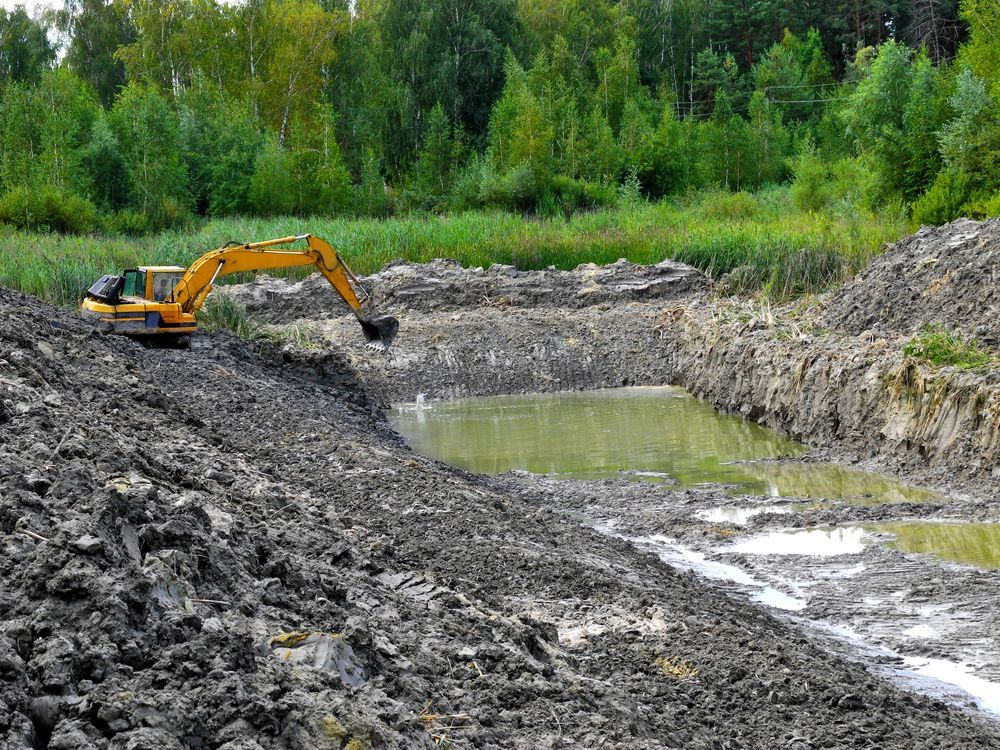
What Pond Restoration Actually Accomplishes
Pond restoration involves two distinct phases that have to happen in order. The first is bank and shoreline clearing, which is essentially the same work as rural brush clearing—removing woody growth, overhanging trees, and encroaching vegetation from the dam face, the banks, and the approach area so equipment can reach the waterline safely. The second phase is the pond work itself: silt removal, reshaping the bottom contour, and cutting the shoreline back to a slope that holds without slumping. Neither phase is effective without the other, and starting in the water before the banks are clear creates access and stability problems for the equipment.
Once restoration is finished, the difference is visible immediately: the shoreline is open and defined, the water has depth again, and the dam face is accessible and checkable. On parcels in the Palmyra and Borden areas where older farm ponds have been left unmanaged for years, the cleared banks also reveal the condition of the dam structure itself—which is often the moment property owners discover that outlet pipes or spillways need separate attention.
Genesis Earthworks brings twelve years of site work and earthmoving experience to pond restoration, and the owner-operated structure means there is no ambiguity about who assessed the site and who is making decisions during the work. The free estimate is the right time to walk the dam, identify the outlet condition, and confirm whether any structural repair falls inside or outside the restoration scope.
Answers About How the Work Is Done
The questions below address how pond restoration is sequenced, what the process involves on older rural properties, and what the pond looks like when the work is complete.
Why does bank clearing happen before silt removal starts?
Equipment working in or around a silted pond needs stable ground to operate from—clearing the banks first creates that access and also reveals the full condition of the shoreline and dam face before any digging begins in the water.
How is the target depth and slope of the restored pond established?
The depth and shoreline slope are set by what you specify during the estimate walk, based on what the pond is used for and what depth it held when it was last functional—those numbers become the targets the crew works toward during reshaping.
What happens to silt and debris removed from the pond?
Spoil material can be spread on the surrounding property or hauled off, and that decision needs to be confirmed in the quote before work starts because it affects both the scope and the equipment time required.
How does the age of rural ponds on Clark and Floyd County properties affect restoration scope?
Older farm ponds in this area were often built with minimal outlet infrastructure, and decades of silting mean the original bottom contour is difficult to read—restoration on these ponds typically requires a longer clearing phase before the actual depth of accumulated silt becomes clear.
What should a restored pond shoreline look like when the crew is finished?
The banks should be clear of woody growth, the shoreline slope should be consistent around the perimeter, and the water edge should be defined and stable rather than brushed over and irregular—those are the visible indicators that the reshaping was completed to the specified contour.
Genesis Earthworks also restores ponds in Corydon, Salem, Jeffersonville, Scottsburg, and New Albany. To discuss what your pond needs and get a free on-site estimate, call Genesis Earthworks at (812) 704-7936.