Buried Lines Laid to Spec, Surface Restored
Underground utility installation in Elizabeth for rural home sites and build properties with long runs from the road
Country homes sited well back from the road routinely need a long buried run of electric, water, or communication line, and that run is often cut through ground that has just been cleared and is not yet stable or graded to its final surface. Genesis Earthworks installs underground utility runs on rural and build-site properties in Elizabeth, and the crew that opens the trench is the same crew that lays the conduit or pipe and backfills and restores the surface. That continuity matters because decisions made during the trench cut—how depth changes across grade transitions, where existing lines require the route to shift—are made by the same people responsible for the finished result.
Before any digging begins, existing lines are located and the utility locate must already be requested and marked before the crew arrives on site. The trench is then cut to the depth and width required for the specific utility being installed, conduit or pipe is laid, and the trench is backfilled in layers with compaction between lifts. The finished surface is graded back to match the surrounding ground so the run is not visible once the work is complete. Customers building near Charlestown or on parcels in New Washington where road setbacks create long service runs should confirm the locate request is in before scheduling the crew.
To review the run length and ground conditions on your property, schedule a site visit with Genesis Earthworks before the installation date.
What Proper Underground Utility Work Requires
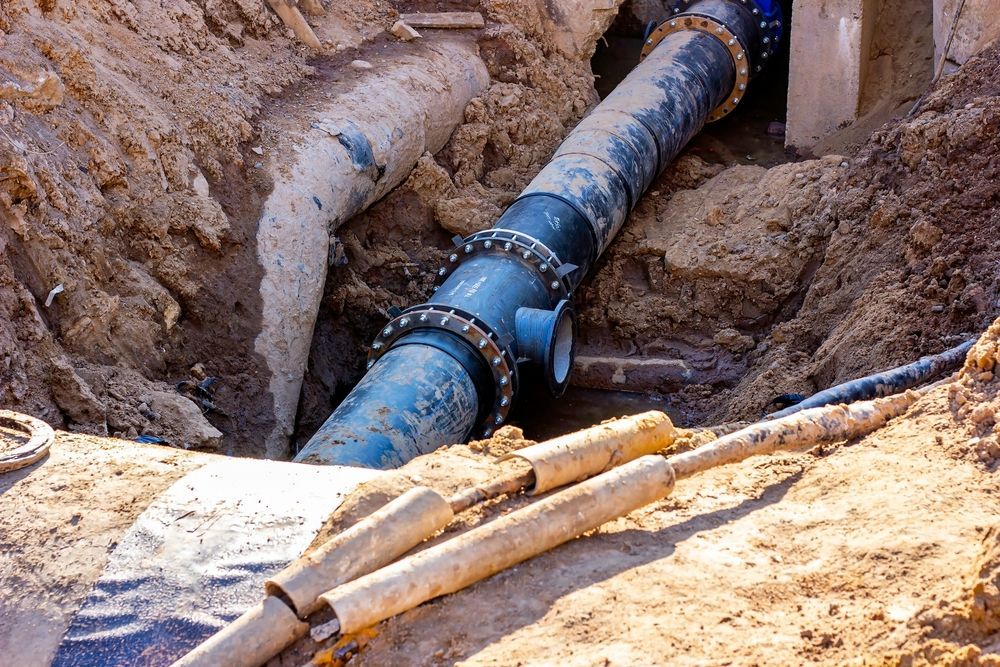
Underground utility installation involves a specific sequence that cannot be reversed once the trench is backfilled: the locate must be complete before digging, the trench must be at the correct depth before the line goes in, and the backfill must be placed in compacted lifts before the surface is restored. Skipping or shortcutting any of those steps creates a condition that is invisible once the ground is closed but that shows up later—as a line at insufficient burial depth, as a settled trench line across a driveway, or as a utility conflict discovered when a second line is installed years later.
Once the installation is finished, the most immediate observable outcome is that the surface grade along the trench line matches the surrounding ground and does not show a depression or raised berm. The buried line itself is not visible, but the graded surface above it indicates whether the backfill was compacted properly—a well-compacted trench does not settle into a visible channel after the first rain. Customers can walk the restored surface and confirm the grade is consistent with the surrounding area before the crew leaves.
The type of utility being installed determines the conduit material, burial depth, and whether bedding material is required beneath the pipe before backfill is placed. Electric conduit, water supply line, and communication line each carry different specifications, and those are typically set by the utility provider or applicable code rather than by the installing contractor. Customers should have those specifications confirmed with their utility provider before the trench is opened so the depth and conduit type are correct from the first cut.
Common Questions About Underground Utility Installation
Property owners planning a rural build or extending service to an outbuilding typically have questions about the installation sequence, what they need to have ready, and how to verify the finished work is correct.
Why must the utility locate be complete before the crew arrives?
Digging into an unmarked existing line creates a safety hazard that immediately halts the job and may require the utility provider to respond before work can resume—having the locate complete and flags in place before the crew mobilizes prevents that disruption entirely.
How is backfill compacted around buried conduit without damaging it?
Backfill is placed in controlled lifts alongside and above the conduit, with each lift compacted before the next is added—the compaction tool and lift depth are managed to transfer density into the fill without applying direct force to the pipe or conduit wall.
What determines the required burial depth for a utility line?
Burial depth is specified by the utility provider or applicable code based on the type of line being installed—electric conduit typically requires greater depth than communication line, and the spec should be confirmed with the provider before the trench dimensions are established.
How does a long utility run on a rural Elizabeth parcel differ from a short service connection?
A long run through varied terrain requires more attention to consistent depth as the grade changes, and any low point along the run where water could collect inside the trench before backfill must be addressed during installation rather than after the trench is closed.
What does the finished surface look like after the trench is backfilled and graded?
The surface grade above the trench line is restored to match the surrounding ground—no visible depression, no raised berm, and no equipment ruts if the crew grades the access path as part of the surface restoration.
Genesis Earthworks also installs underground utilities in Corydon, Salem, Jeffersonville, Scottsburg, and New Albany. If you have a utility run to plan and want to confirm the trench depth, route, and surface restoration scope before work begins, Genesis Earthworks can meet you on site to review the installation specifics.