Dense Brush Cleared Without Hauling a Load
Forestry mulching in Elizabeth for overgrown lots, wooded back parcels, and rural acreage too thick to clear by hand
Wooded back lots and older rural parcels in this part of southern Indiana frequently carry dense brush and small timber that has grown beyond what hand clearing can address in a practical timeframe, and hauling cut material off-site adds significant cost and logistics to a land clearing job. Forestry mulching handles both problems by grinding standing and fallen brush and small trees into chips that remain on the ground as mulch, leaving a clean surface without a debris pile to move. Genesis Earthworks runs a CAT 275 skid steer fitted with a land-clearing package, and forestry mulching is the owner's most frequently performed work—which means the machine setup, the sequencing, and the edge work are not learned on your property.
The crew works the tree line and property edges first to establish a clean boundary, then sweeps the interior in overlapping passes until the ground is clear. That sequence keeps the finished edges defined and avoids pushing debris toward boundary lines as the interior clearing progresses. Before booking, customers should identify which trees are being retained and how far the finished mulch layer will be spread, since those decisions affect how the passes are run and where the machine works close to preserved vegetation.
Describe the parcel and the vegetation type to Genesis Earthworks before scheduling so the right approach and pass sequence can be confirmed for your specific ground conditions.
The Difference Between Mulching and Conventional Clearing
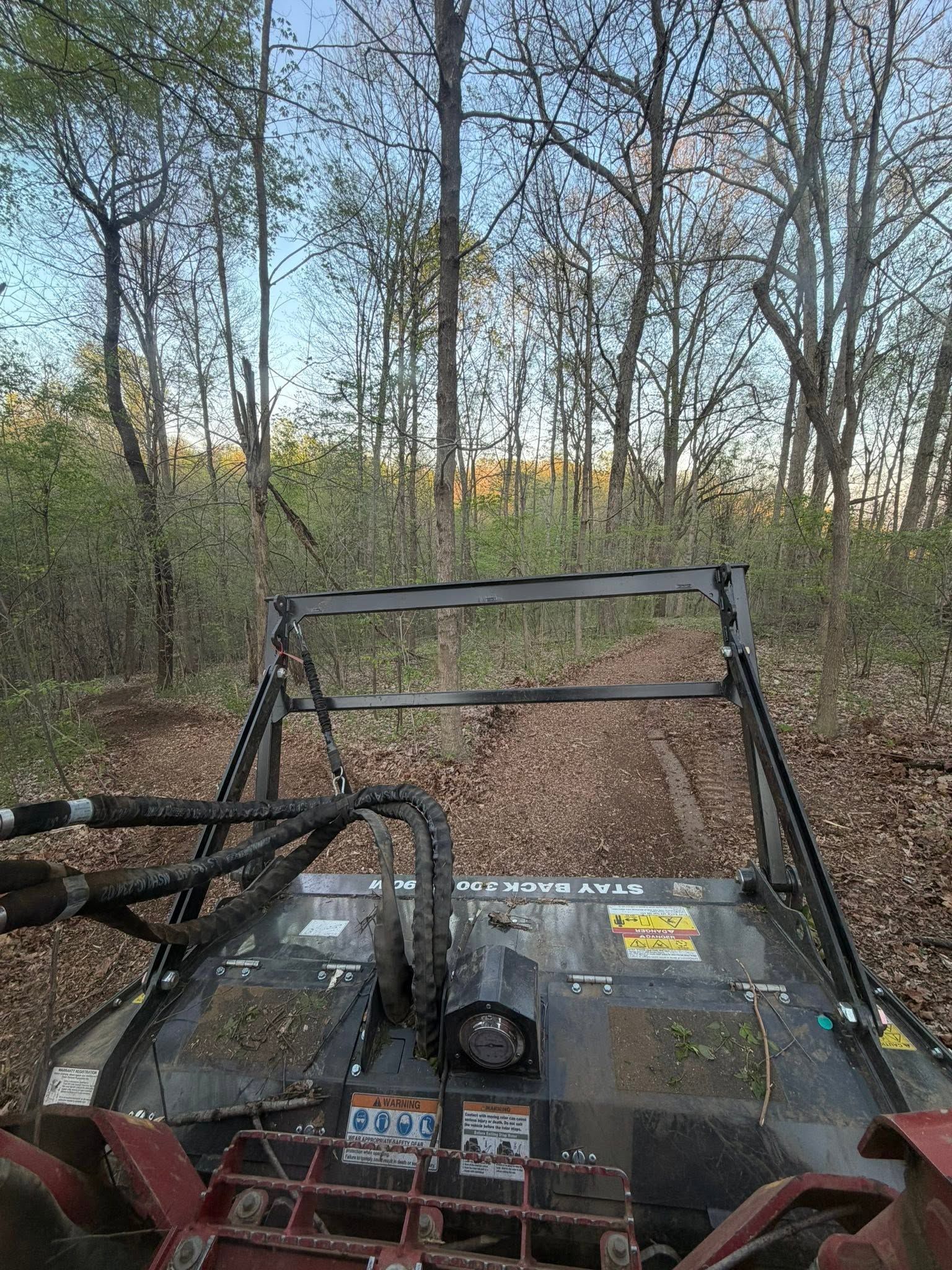
Conventional clearing methods—cutting, stacking, and burning or hauling—separate the clearing work from the debris handling, which means two distinct operations and the logistical cost of each. Forestry mulching collapses those steps into a single machine pass: the mulcher grinds material as it moves through, so the ground behind the machine is already at its finished state rather than covered in piles waiting for a second crew. The chips left on the surface also provide ground cover that limits erosion on freshly cleared ground, which matters on sloped parcels where bare soil is vulnerable once the root structure is removed.
Once the work is complete, the property looks fundamentally different in a way that is immediately useful: the ground is visible, walkable, and accessible for whatever comes next—a survey, a perc test, an equipment staging area, or the start of site grading. What does not change is the soil structure beneath the surface, because the machine operates above grade rather than digging or grubbing the root mass out. For customers near Marengo who are opening up timbered back lots for the first time, that distinction between a mulched surface and a graded one is important to understand before deciding which service the project actually needs.
Customers should confirm before booking which individual trees are being preserved and whether any of the ground being cleared has buried debris, old fence wire, or rock that the machine operator should know about before running passes. Those conditions affect how the machine is set up and how the pass speed is managed to avoid damage to the cutting head.
What to Know Before Scheduling Mulching Work
Forestry mulching is a specific process with specific outputs, and property owners considering it for the first time have practical questions about what the machine does, what gets left behind, and how to prepare the site.
What size trees and brush can a forestry mulcher handle?
A CAT 275 skid steer with a land-clearing attachment handles brush, saplings, and small timber effectively—material diameter and density affect pass speed, but the machine is designed specifically for ground-level clearing of the type of vegetation common on overgrown rural lots.
Why does the crew clear the edges and tree line before working the interior?
Starting at the perimeter establishes a defined boundary and prevents material from being pushed outward into adjacent areas; interior passes then work toward the center or in consistent overlapping sweeps without disturbing the established edge.
What remains on the ground after mulching is complete?
Wood chips from the ground vegetation stay in place as a mulch layer on the surface—no debris piles, no stumps above grade, and no hauling required, which is the primary efficiency difference between mulching and cut-and-haul clearing.
How does forestry mulching interact with a subsequent grading job?
Mulching leaves the root mass in the ground and chips on the surface, so if a graded building pad is the end goal, grading work follows the mulching and the operator needs to know the chip layer depth before setting cut grades.
What information should a property owner have ready before the crew arrives?
The location of any trees to be retained, the presence of buried wire or old fence lines, and the access point the machine will use to enter the parcel are all details that affect how the job is set up and sequenced from the first pass.
Genesis Earthworks also performs forestry mulching in Corydon, Salem, Jeffersonville, Scottsburg, and New Albany. If your parcel has overgrown brush or light timber and you want to see the ground again without a hauling operation, connect with Genesis Earthworks to review the site and confirm what the mulching work will cover.