Stable, Finished Ground Before Building Starts
Grading and leveling in Elizabeth for sloped building sites, cut pads, and cleared lots that need a level, compacted surface
Hillside house pads in southern Indiana are regularly cut into sloped ground, and that process involves substantially more cutting and filling than bringing a flat lot to grade. Getting the finished surface level, stable, and properly compacted takes controlled lifts, compaction between layers, and a grade check against the plan before the surface is called done—not a single pass with a blade. Genesis Earthworks grades and levels building sites and cleared parcels in Elizabeth, with the owner setting grades on the ground himself and staying on the job through completion. That operational structure means the person reading the grade rod is the same person who made the cuts.
The crew strips the existing surface layer first, then cuts high spots and fills low areas in compacted lifts rather than pushing material into a rough shape and leaving it. Each lift is compacted before the next is added so the finished pad does not settle unevenly once a structure is placed on it or equipment moves across it. The result is a surface that holds its elevation under load and sheds water away from the structure rather than collecting it at the foundation edge.
Request a site evaluation from Genesis Earthworks to review your lot's existing grade and identify what cutting and filling the finished surface will require.
How Grading Is Done Correctly on Sloped Ground
The distinction between a graded surface that holds and one that settles comes down to how the fill is placed and compacted. Material pushed into a low spot as a single mass will compress under load over time because air pockets and loose material within the fill consolidate. Placing fill in measured lifts—typically six to eight inches of compacted material at a time—removes that variable and produces a pad with consistent density from the bottom of the fill to the finished surface.
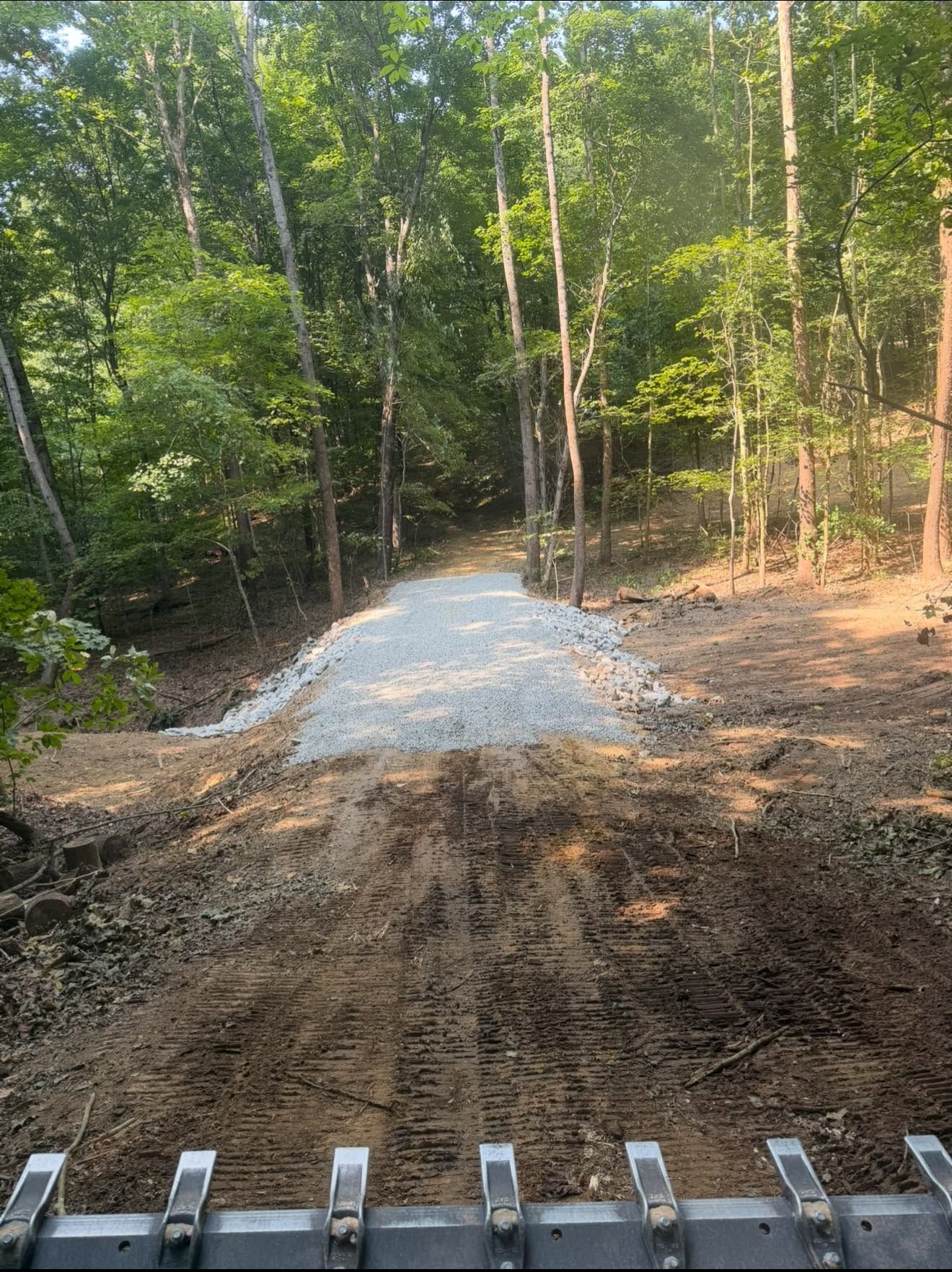
Once grading is complete, the observable changes are immediate: the surface is flat or follows a consistent slope where one was designed, water moves off the pad edge rather than pooling across it, and the ground does not give or shift underfoot or under equipment. For customers building on a hillside lot, the before-and-after contrast is visible the first time it rains and the pad drains cleanly to the downhill edge.
Customers should factor in whether topsoil stripping, haul-off of excess cut material, or final surface preparation for seeding or gravel is part of the scope, since those steps affect both the finished appearance and the behavior of the surface going forward. On a cut-and-fill pad where significant material was moved, confirming that the grade matches the original plan is the final step before the site is released for foundation work or structure placement.
Answers About the Grading Process
Grading and leveling questions tend to center on what the process actually involves and how the finished surface will perform—particularly for property owners who are preparing a site for a home, outbuilding, or driveway on uneven ground.
What happens to material that is cut from high spots during grading?
Cut material is typically moved to fill low areas on the same site; if the cut volume significantly exceeds the fill volume needed, the excess may need to be hauled off, which is a scope item that should be confirmed before work begins.
Why is compaction done in lifts rather than all at once?
Compacting a deep fill section in a single pass does not transfer compaction force uniformly through the entire depth—working in lifts ensures every layer reaches the required density before the next is added, which prevents differential settling under load.
How does a sloped lot in Elizabeth affect the grading approach compared to a flat lot?
A sloped lot requires more precise cut-and-fill sequencing because the material removed from the high side must be moved and placed on the low side in a controlled way to avoid over-filling areas that drain toward the structure—flat lots have less of that directional challenge.
What does the finished grade need to accomplish beyond being level?
The finished surface must shed water away from the structure perimeter, maintain its elevation under equipment and foot traffic, and provide a consistent base for whatever comes next—foundation, gravel, or seeding.
How is the finished grade verified before the job is considered complete?
The grade is checked against the established plan using a level and grade rod, and the finished surface is walked to confirm there are no low spots where water would collect or high spots that would create drainage problems at the structure edge.
Genesis Earthworks also performs grading and leveling in Corydon, Salem, Jeffersonville, Scottsburg, and New Albany. If your site has been cleared and is ready for grade work, Genesis Earthworks can assess what the surface currently looks like and outline exactly what will be done to bring it to a finished, buildable condition.