Cut Lines That Run True and Deep
Trenching in Elizabeth for utility runs, pipe placement, and conduit burial on rural and residential parcels
Genesis Earthworks handles trenching on rural and residential properties in Elizabeth, cutting lines for pipe, conduit, and utility runs at the depth and width each installation requires. Property owners who need a buried line run from a road to a home site, or from a structure to an outbuilding, need the cut to be straight, uniform, and dug to the correct specification before anything goes in the ground. Genesis Earthworks is owner-operated, which means the same person who marks the route with you is running the equipment and responsible for the finished trench.
Before the machine moves, the route is marked on site with the customer present, and any brush or growth along the line is cleared so the trench can be cut without obstruction. The trench is then opened to the depth and width required for the pipe or conduit being installed. Customers should confirm before work begins whether pipe supply, backfill, and surface restoration are included in the scope, since those variables change how the job is structured and what the finished ground looks like when the crew leaves.
To discuss a specific run on your property and confirm what the trench work will include, contact Genesis Earthworks directly to arrange a site visit.
How a Properly Cut Trench Affects Everything That Goes Into It
A trench that wanders off line, varies in depth, or leaves uneven sidewalls creates problems at every stage that follows. Pipe that rests on high spots rather than continuous bedding can shift, and conduit laid in a trench that shallows out unexpectedly may not meet the burial depth required by the relevant utility or code. The route marking step—done on site with the customer—exists specifically to resolve those conditions before the cut begins, not after.
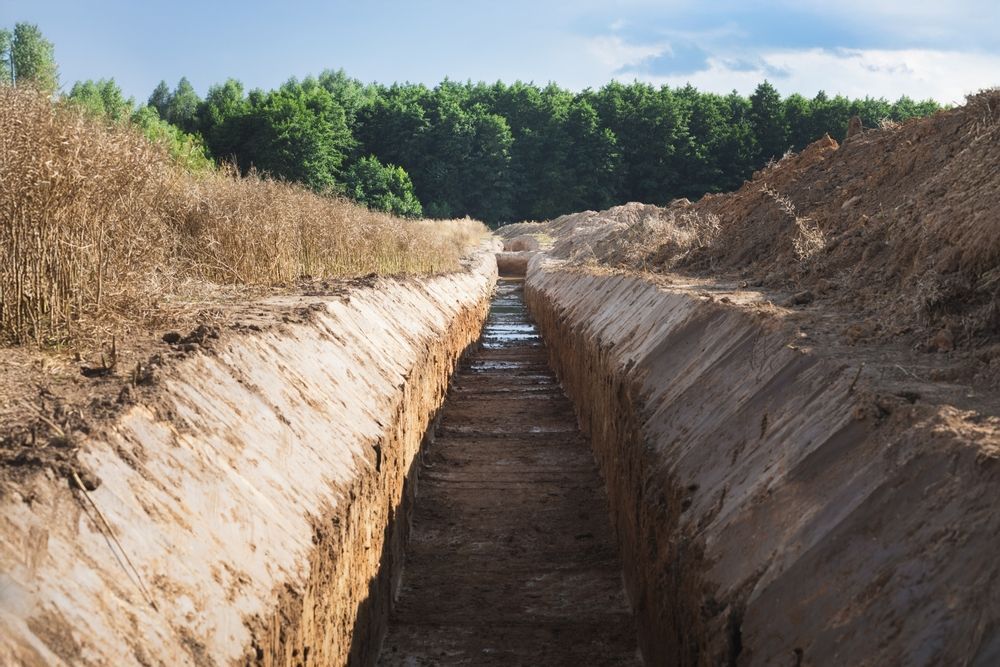
Once the trench is opened to spec, the customer can visually confirm the line runs where it should and that the depth is consistent from one end to the other before anything is placed inside it. That visible check is one of the clearest indicators of quality trench work: a straight, consistent cut that holds its depth through changes in grade and soil type. In areas around New Washington where parcels run back a considerable distance from the road, maintaining that consistency across a long run is where machine control and route planning matter most.
Brush clearing along the trench line is part of the process rather than a separate mobilization, which keeps the cut moving without interruption. Customers who are coordinating a utility installation should confirm that the utility locate request has been submitted before the crew arrives, since digging cannot begin until existing lines are marked. The scope of backfill and surface grading should be settled at the estimate stage so the finished job matches what the customer expects when the equipment leaves the site.
What Property Owners Ask About Trench Work
These questions come up regularly when property owners are planning a buried line run, whether for a new build, an outbuilding, or a utility extension across a cleared parcel.
What determines the required depth for a trench?
Burial depth is set by the type of line being installed—electric conduit, water pipe, and communication lines each have minimum depth requirements that differ, and those requirements are typically established by the utility provider or local code rather than by the excavating contractor.
How is the trench route marked before cutting begins?
The route is marked on site with the customer present so that the line avoids obstacles, respects property boundaries, and follows the most direct practical path between the two endpoints.
Why does brush clearing happen before the trench is cut?
Clearing the line first gives the machine an unobstructed path, which allows the operator to maintain consistent depth and direction rather than working around vegetation mid-cut.
What should be confirmed before the crew arrives to dig?
The utility locate request should already be submitted and the marked flags should be in place before digging begins, since cutting into an existing line halts the job and creates a safety issue that takes priority over everything else.
How does trench work on a long rural run in Elizabeth differ from a short residential cut?
A longer run through ground that has been recently cleared or that changes grade across the parcel requires more attention to consistent depth and line, because small deviations in elevation compound over distance in ways that a short run would not reveal.
Genesis Earthworks also performs trenching in Corydon, Salem, Jeffersonville, Scottsburg, and New Albany. If you have a run to cut and want to walk the route before committing to a scope, Genesis Earthworks can meet you on site to review the line and clarify exactly what the trench work will cover.