Water Moves Off the Ground, Not Into It
Drainage systems in Elizabeth for parcels, house pads, and driveways where runoff has no clear exit
Long rural parcels and back lots across this part of southern Indiana were often developed when the natural ground cover and existing timber did the work of slowing and directing surface water. Once that cover is removed for a build site or driveway, low spots that once drained slowly become areas where water stands, and older culverts sized for lightly disturbed ground may no longer carry the volume the cleared surface now sheds. Genesis Earthworks works on exactly these properties, cutting and installing drainage systems that give water a defined path off the ground and away from structures. The crew sets pipe or stone to a continuous fall so that runoff moves in a controlled direction rather than finding its own way across the surface.
The drainage route is cut to establish a consistent grade from the collection point to the outlet, and pipe or stone is set so there are no flat sections where water can stall and back up. The surface is then backfilled and graded to restore the ground level while maintaining the fall. On parcels near Georgetown where back lots have been recently cleared for development, this kind of system is often the first permanent site improvement after the mulching and grading work is done, because unmanaged runoff undoes grading work quickly once rain moves across bare ground.
Arrange an on-site review with Genesis Earthworks to identify where water is collecting and what the drainage route would look like on your specific parcel.
What Drainage Work Actually Accomplishes on Rural Ground
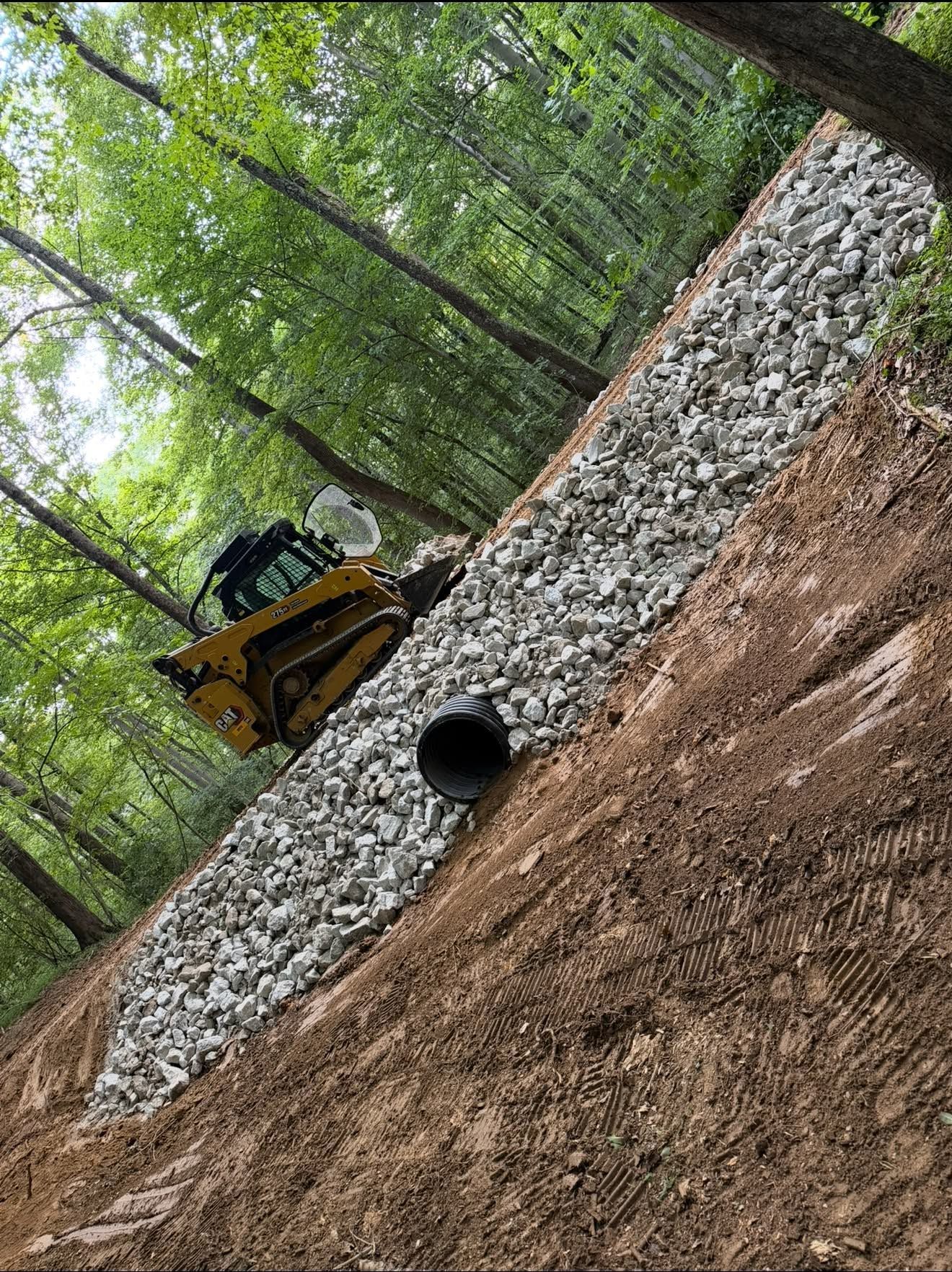
Setting a drainage system that works begins with finding a continuous fall from the problem area to a suitable outlet. That sounds straightforward, but on a rural parcel with irregular terrain, the fall may need to be engineered around existing features—driveways, building pads, cleared perimeters—rather than following the easiest path downhill. The crew cuts the route at the correct grade, places pipe at the depth needed to handle both surface and subsurface flow, and sequences the backfill so the pipe stays in position while the material is compacted around it.
After the system is complete, the most visible change is that water that previously pooled against the house pad or spread across the driveway after a rain now has a defined exit route and moves off the surface rather than sitting on it. Grading the surface above the installed pipe back to match the surrounding ground means the system is not visible once the work is done, but the drainage behavior of the parcel changes measurably.
The condition of existing culverts, if any are on the property, affects how the new system ties in or whether those culverts need to be addressed separately. On older rural parcels that predate modern drainage planning, it is common to find culverts that are undersized, partially collapsed, or outlet into areas that are no longer adequate. Those conditions are identified during the site evaluation and factored into how the system is designed and where it outlets.
Questions About Getting Drainage Right the First Time
Rural drainage systems involve decisions that are made on the ground rather than on paper, and property owners often have specific questions about how the work unfolds and what they will see when it is finished.
What is the difference between surface grading and an installed drainage system?
Grading moves water by shaping the ground surface to create slope away from structures, while an installed system uses buried pipe or stone to carry water to a defined outlet regardless of what the surface does above it—both address runoff, but they handle different volumes and different failure conditions.
How is the outlet point for a drainage system selected?
The outlet must be at a lower elevation than the collection point, must have somewhere for the water to go without causing erosion or pooling on a neighbor's property, and must be accessible for the pipe to daylight cleanly—in Elizabeth, back lots draining toward tree lines or established low areas typically provide workable outlet locations.
Why does pipe need to be set to a continuous fall rather than just buried level?
A level pipe section creates a point where water stalls and sediment accumulates, which eventually reduces the pipe's capacity and can cause backflow toward the area the system was designed to drain.
How does clearing timber change the drainage behavior of a rural parcel?
Timber canopy and root structure absorb and slow surface water; once trees are removed, the same rain volume hits bare ground at full speed, which is why drainage systems are often installed immediately after land clearing rather than as a later addition.
What does the finished ground look like after pipe is installed and backfilled?
The surface is graded back to match the surrounding grade, so the trench line is not visible once the work is complete—what changes is how water behaves on the surface, not the visible appearance of the ground.
Genesis Earthworks also installs drainage systems in Corydon, Salem, Jeffersonville, Scottsburg, and New Albany. If water is collecting on your property after clearing or grading work, Genesis Earthworks can walk the parcel with you and identify where a system needs to go before conditions get established as a recurring problem.